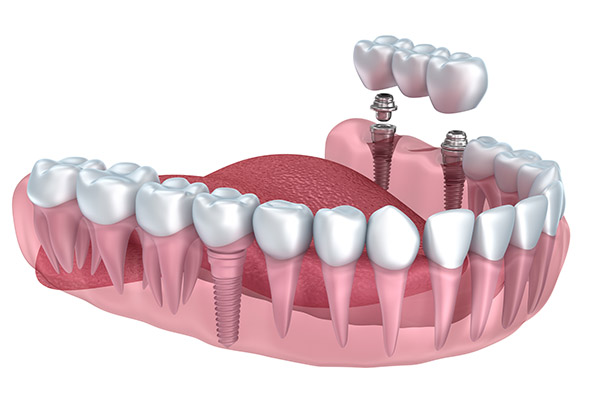
 Implant dentistry involves teeth replacement with dental implants. One popular option within implant dentistry is an implant-supported bridge, which is ideal for replacing a section of missing teeth. The following review discusses everything you should know about an implant-supported bridge.
Implant dentistry: Everything to know about an implant-supported bridge
Many are choosing implant dentistry for teeth replacement over a traditional fixed bridge and removable partial dentures. An implant-supported bridge offers unique advantages over a traditional fixed bridge. By learning more about implant-supported bridge treatment and who it is ideal for, you can decide if treatment is right for you.
What is an implant-supported bridge?
An implant-supported bridge is a form of teeth replacement that uses dental implants, dental abutments, and a dental bridge to replace a section of missing teeth. The dental implants, which are screw-like posts of titanium material, are fixed into the jaw and serve as the support for the dental bridge. The abutment and the bridge (which consists of several replacement teeth that are indistinguishable from natural teeth) are attached on a follow-up procedure after osseointegration between the implants and the jawbone takes place.
What are the benefits of an implant-supported bridge?
When compared with a traditional dental bridge, which is supported by adjacent teeth, an implant-supported bridge offers a much stronger and more reliable solution that can last for well beyond a decade. An implant-supported bridge can also preserve jawbone density. They are also permanent solutions, whereas a removable partial denture must be removed and cleaned regularly.
Who should consider an implant-supported bridge?
An implant-supported bridge is an ideal solution for anyone in replacing a section of missing teeth and wants a restoration that looks and functions the same as natural teeth. It is important to note, however, that the dental implants process takes longer than alternative solutions due to the need for a surgical procedure and osseointegration must take place between the jawbone and the implants.
What are other implant dentistry options?
A dentist may recommend an implant-supported crown if only one tooth is being replaced, or they may recommend an implant-supported denture to replace an entire row of missing teeth. The best way to determine which implant dentistry option is most appropriate according to your treatment goals and preferences is to visit with a dentist.
How can I take care of my implant-supported bridge?
Another benefit of implant dentistry is that dental implants are easy to care for with good oral hygiene, smart dietary choices, and regular check-up and cleaning visits with the dentist. A dentist may also recommend wearing a nightguard for bruxism if the patient grinds their teeth at night.
Start the implant dentistry process with a consultation visit
The implant dentistry process begins with a consultation visit with a licensed dentist that offers implant-supported bridge (as well implant-supported crown and implant-supported dentures) treatment. Call our experienced and professional dental team today to schedule a visit and find out if treatment is right for your teeth replacement goals.
Request an appointment or call Ohio Cosmetic Dentists at 614-503-5240 for an appointment in our Columbus office.
Recent Posts
Everyone learns oral hygiene basics when they are young, but some details get lost over time. For example, many adults are confused about what type of toothbrush to use. This simple tool comes in many different forms, including a variety of sizes and a range of bristle textures. You may wonder why there are so…
Brushing and flossing are essential oral hygiene basics that help prevent tooth decay and gum disease. While many people pay careful attention to their teeth and gums, the tongue is often neglected. However, this large surface of the mouth should also be cleaned on a daily basis. Doing so can help many people enjoy better…
Teeth brushing is one of the most important oral hygiene basics, as it removes plaque from teeth. However, the toothbrush you use can impact how effective this practice is.To optimize toothbrushing, you need to find a brush that fits your needs. Fortunately, there are many options out there.When you first learned oral hygiene basics, you…